Pulse of the City - Keith Haring
A vibrant tribute to the New York icon whose bold lines, colors, and symbols turned the city’s streets into a canvas for joy, unity, and change.
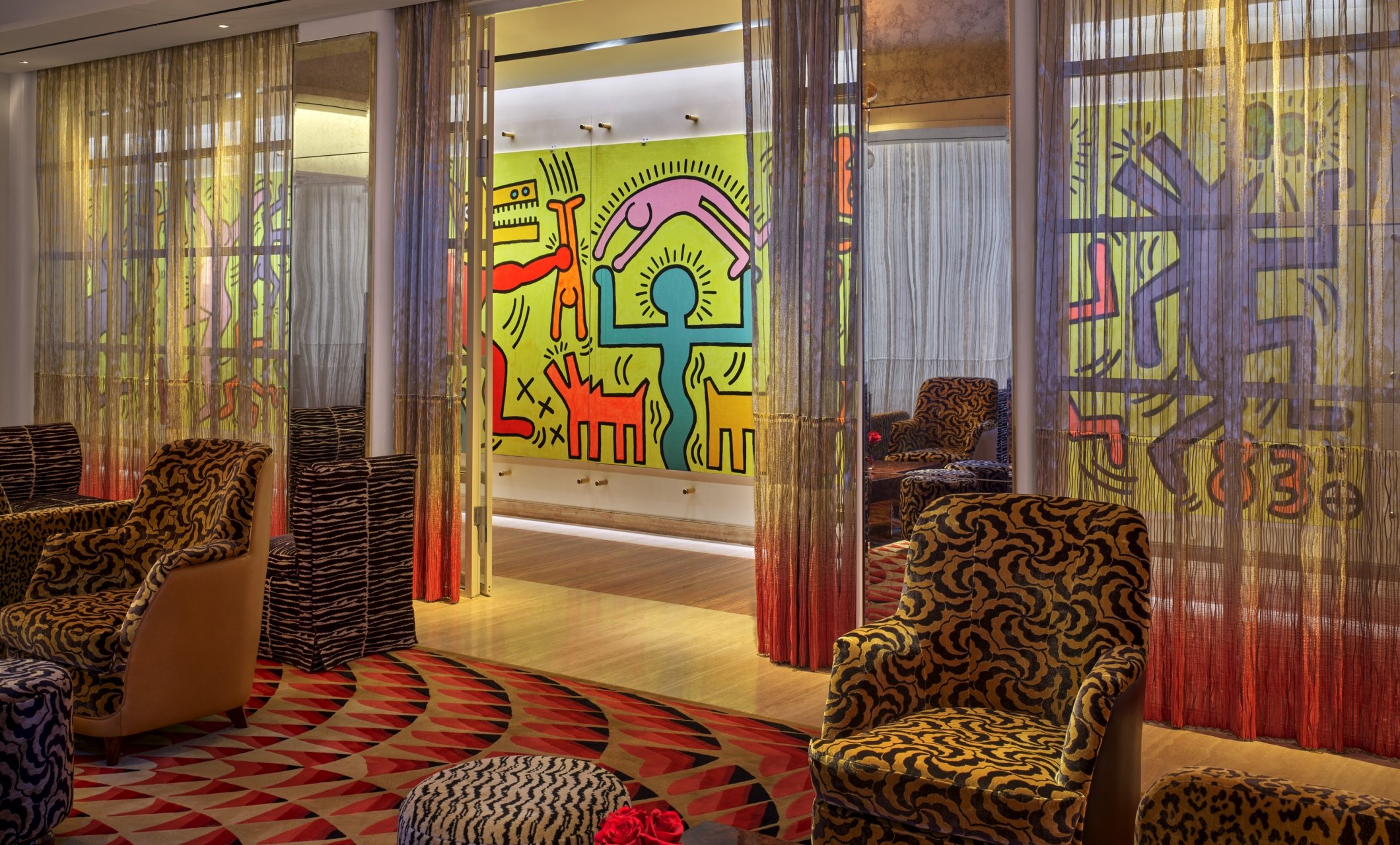
Celebrating the legacy of iconic New York artist Keith Haring, this passageway honors a visionary whose work continues to shape the city’s cultural heartbeat. Emerging from the subways and streets of 1980s downtown Manhattan, Haring brought art into everyday life, breaking down barriers between high and low culture with bold lines, vibrant colors, and universal symbols of love, movement, and resistance. His work became a voice for social change, a beacon of joy, and a mirror of the city’s energy.
In 1983, invited by Montreux Jazz Festival, Keith created this monumental work transforming the festival stage into a living canvas. Working live as musicians performed, he painted large-scale backdrops in his bold, improvisational style, echoing the spontaneity of jazz itself. These works, created in real time before audiences, fused music and art into a single act of performance, capturing the rhythm, energy, freedom, and spontaneity.
As guests move through this corridor toward The Living Room, our space for nightly revelry and connection, they are invited to carry forward Haring’s spirit: one that pulses with inclusivity, and the transformative power of public art.
Keith Haring was an iconic American artist and social activist known for his vibrant, graffiti-inspired art and his ability to merge fine art with street culture. Born in Reading, Pennsylvania, and raised in Kutztown, he developed a passion for drawing at an early age. He later studied at the School of Visual Arts (SVA) in New York City, where he immersed himself in the city’s dynamic art scene.
Haring gained recognition in the early 1980s for his chalk drawings in subway stations, characterized by bold lines, energetic shapes, and universal symbols. His work often addressed themes of social justice, love, life, and death, as well as issues such as AIDS awareness, apartheid, and the nuclear arms race.
He achieved international fame, collaborating with artists like Andy Warhol and Jean-Michel
Basquiat while maintaining his connection to public art through large-scale murals and community projects. Haring’s legacy endures through the Keith Haring Foundation, which supports children’s programs and AIDS-related organizations, and through his art, which continues to inspire new generations.